

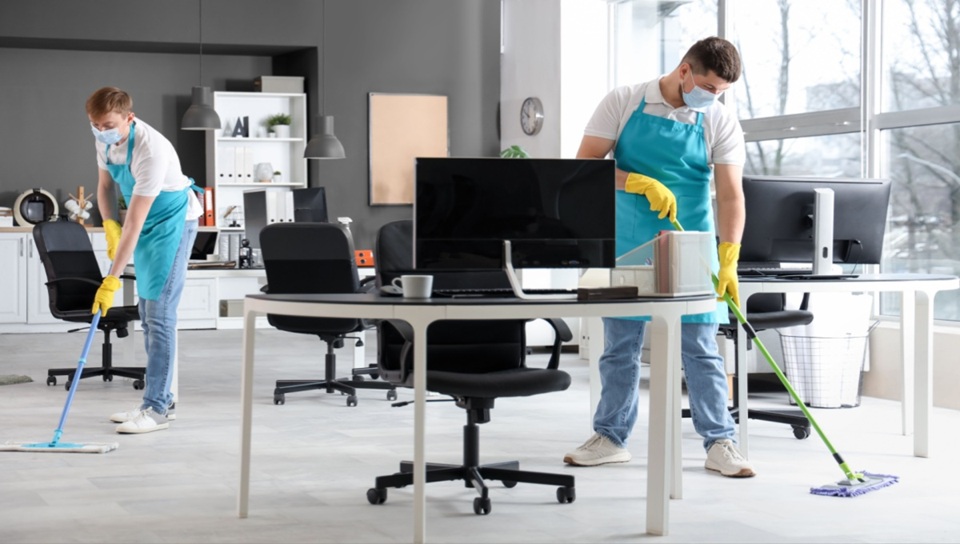
Office cleaning services represent one of modern business’s most essential yet persistently misunderstood expenditures, a line item that executives approve without investigation whilst the workers who actually perform the labour operate in conditions that would shock those same executives if they bothered to look. The industry thrives on a peculiar form of wilful ignorance: companies want clean offices but prefer not to examine too closely how that cleanliness is achieved or at what human cost. This arrangement suits everyone except the people doing the actual work, which is perhaps why it persists.
The Procurement Illusion
Corporate procurement departments approach office cleaning with the same ruthless efficiency they apply to purchasing staplers or printer paper. They issue requests for proposals, compare bids, negotiate terms, and select vendors based primarily on price. The process creates an impression of due diligence whilst systematically obscuring the realities of service delivery.
A typical cleaning contract specifies detailed requirements: frequencies for vacuuming, dusting, toilet cleaning, rubbish removal. It establishes quality standards and includes penalty clauses for non-performance. On paper, everything appears properly controlled. What the contract cannot capture, and what procurement officers rarely investigate, is whether the agreed price allows the contractor to actually deliver the specified service whilst paying workers fairly and providing proper equipment.
The arithmetic tells its own story. Calculate the hours required to thoroughly clean an office according to contract specifications. Multiply by Singapore’s minimum wage requirements. Add overhead for supervision, equipment, cleaning supplies, insurance, and administration. Add a reasonable profit margin. The resulting figure typically exceeds what most companies actually pay for workplace cleaning services by thirty to fifty percent.
Something has to give. That something is usually a combination of understaffing, rushed work, and labour practices that exist in the grey zone between legal minimum standards and genuine fair treatment.
The Night Shift Reality
Office cleaning occurs predominantly during hours when regular employees are absent, which conveniently ensures that the two groups rarely interact. This temporal separation is not accidental. It maintains the psychological distance that allows office workers to benefit from cleaning services without confronting the conditions under which those services are provided.
The cleaners arrive after the office empties, typically between 6 PM and midnight, though some operations run until dawn. They work against strict time allocations: perhaps two hours to clean 10,000 square feet of office space, a target that permits no inefficiency, no thoroughness beyond the minimum, no accommodation for unexpected messes or additional tasks.
The working conditions include:
- Compressed schedulesrequiring multiple job sites per night to earn adequate income, with travel time unpaid
- Piece-rate pressurewhere compensation effectively depends on speed rather than quality, penalising thoroughness
- Equipment deficiencieswhen contractors economise by providing inadequate or worn-out cleaning tools
- Chemical exposureto cleaning agents without always adequate ventilation or protective equipment
- Isolationfrom other workers and supervision, making documentation of problems or injuries difficult
The Ministry of Manpower establishes baseline requirements for wages, working hours, and safety standards. Enforcement, however, depends largely on workers filing complaints, a mechanism that functions poorly when workers fear retaliation or visa complications.
The Quality Mirage
Companies believe they receive thorough cleaning because offices look acceptable each morning. Rubbish bins are empty. Visible surfaces appear wiped. Toilets are usable. This surface-level adequacy masks what is not being done.
High surfaces go undusted for weeks. Carpets receive vacuuming but not the periodic deep extraction they require. Breakroom appliances are wiped externally but never properly sanitised internally. Dust accumulates in ventilation grilles and behind equipment. The office appears clean whilst slowly accumulating contamination in areas that cleaners either cannot reach in allocated time or are not specifically required to address in contracts written to minimise cost rather than maximise hygiene.
Periodic quality inspections, when they occur, typically give advance notice, allowing contractors to deploy extra resources temporarily. The routine service continues at its usual inadequate level until the next scheduled audit approaches.
The Regulatory Gap
Singapore’s workplace safety regulations theoretically protect cleaning workers, but the fragmented nature of the industry complicates enforcement. A large office building might employ workers from several different contractors, each responsible for different areas or shifts. This dispersion of responsibility creates gaps where accountability dissolves.
The Workplace Safety and Health Council provides guidelines for office cleaning operations, including recommendations for chemical handling, equipment use, and ergonomic practices. These remain recommendations rather than strict requirements, and their implementation depends on contractor diligence that economic pressures constantly undermine.
The Unspoken Bargain
The current system for office cleaning services persists because it serves the interests of everyone except the workers. Companies obtain apparently clean offices at prices that seem reasonable. Contractors can bid competitively and extract some profit. Office employees work in maintained spaces without confronting uncomfortable questions about labour practices. The costs are externalised onto workers who lack power to renegotiate the arrangement.
Reform would require acknowledging that quality cleaning cannot be delivered at the prices most companies currently pay, that the quest for ever-cheaper office cleaning services has created a race to the bottom that degrades both service quality and working conditions, and that the convenient ignorance allowing executives to approve inadequate cleaning budgets whilst expecting pristine offices represents a bargain that someone else pays for.
